

Thursday, October 13, 2016
An article about Accelerated Orthodontics

Thursday, October 3, 2013
Is It Really October Already?
Halloween can be a particularly scary time for teeth. Boschken Orthodontics offers these tips to keep teeth safe from decay and in particular to protect braces, aligners and other orthodontic appliances during the Halloween season: Avoid sticky situations with your braces! Stay away from hard, sticky, crunchy or chewy candy and snacks. These include hard or chewy candies, caramel, liquorice, taffy, bubblegum (even the sugarless kind) and jelly beans. Also steer away from nuts, tortilla chips and popcorn (especially the un-popped kernels). Good snack alternatives include soft chocolates, peanut butter cups or other melt-in-your-mouth varieties.
If you consume sweets, please do so in moderation. Avoid the temptation to grab another handful from the bowl filled with treats. Whether or not they are in orthodontic treatment, limit the time that children can snack from the Halloween candy bowl.
Brushing and flossing are more important than ever during the Halloween season, because teeth generally receive more exposure to sweets that can cause cavities and acid etching. Orthodontic patients should be especially conscientious about brushing and flossing after consuming sugary or starchy foods. Remember, brush and floss daily to gain a perfect smile!
Thursday, June 13, 2013
When will my braces come off, Dr. Boschken?
The question we are asked most commonly as an orthodontist is “When do I get my braces off?” Although treatment is different for every single patient, there are some basic objectives and steps of treatment that are similar for the majority of patients. If you currently wear braces and want to know how you are progressing, read on…
In my offices there are three distinct phases of treatment through which every patient must pass. Although their order may be switched or there may be some overlap between them, the three phases include resolving the crowding/spacing, aligning the teeth, and correcting the bite.
First, crowding is corrected by expanding the arches or by removing teeth. Teeth cannot be correctly aligned if there is not enough room. The decision to expand or extract is determined by a number of variables including the size of the teeth and jaws, the amount of bone and gum tissue supporting the roots, and the profile. The first objective is to create room so that the teeth can be aligned. If a patient has extra space at the beginning of treatment, that space must be closed during this step.
Once there is room, the second step is to properly align or straighten the teeth. Aligning the arches is accomplished using wires, elastics, power-chains, springs, and other auxiliaries (“gadgets”) that rotate, tip, and torque the teeth into their desired positions. Another common step in the alignment process is “repositioning” individual brackets. Sometimes brackets cannot be put in the right place on the first day because of the bite, the alignment, or the shape of the teeth. However, after the teeth have been partially aligned, brackets can then be moved to better positions.
The third goal of treatment is correcting the bite or making certain that the upper teeth fit with the lower ones. This must be accomplished in all three planes of space, front to back (overbite or under-bite), side to side (cross-bites), as well as top to bottom (open bite or deep bite). Making the upper match the lower is accomplished with wires, rubber bands, springs, or very rarely, surgery. When the bite is right, the backs of the top teeth rest lightly on the fronts of the bottom ones. (There are also some specific functional relationships that must be “just so” at the end of treatment, but the specifics are beyond the scope of this article.)
The “When do I get my braces off?” question usually arises during the third or “bite phase” of treatment. By that time the crowded, crooked teeth are gone and the patient is generally happy with how things look. Admittedly, the first half of treatment is more exciting than the last half. It is during the final phase however where the bite is corrected so that the results will be healthy and stable.
If you are wondering if you’re getting close to getting your braces off, compare what you see in your mouth with this list:
1. Are the teeth straight?
2. Are the spaces between the teeth closed completely?
3. Do the upper front teeth overlap the lower front teeth appropriately (not too deep, but no visible space between them)?
4. Are the outer cusps of the upper teeth resting on the outside of the corresponding ones in the lower?
5. Is the overbite or under-bite corrected?
2. Are the spaces between the teeth closed completely?
3. Do the upper front teeth overlap the lower front teeth appropriately (not too deep, but no visible space between them)?
4. Are the outer cusps of the upper teeth resting on the outside of the corresponding ones in the lower?
5. Is the overbite or under-bite corrected?
If it is obvious that your teeth are still crooked, have spaces between them, or you still have a deep bite or overbite, you probably still have some time remaining. If your treatment time is longer that was originally estimated, ask yourself if you have everything you can to achieve your orthodontic goals. If you have specific questions about your smile, ask Dr. Boschken to explain what objectives remain in your treatment. Dr. Boschken is hoping for the most perfect results and your braces will come off when the best result is achieved and not before. Good luck, and keep smiling!
http://www.drboschken.com/about/boschken.shtml
Thursday, May 30, 2013
How Do I Know If I Need Orthodontics?

Waiting until facial development is complete or until the permanent teeth have come in can make correction of many orthodontic issues more challenging. Both children and adults can benefit from orthodontic care, but addressing issues early is almost always the ideal choice.
Are you wondering if you or your child might have need for orthodontic care? Here are some of the most common early conditions to watch for that can indicate the need for an orthodontic evaluation:
• Difficulty when chewing or biting
• Chronic mouth-breathing
• Sucking the thumb, fingers, or any other oral sucking habits that continue after age 6
• Overbite – when the upper teeth overlap the lower teeth by more than 5mm
• Top front teeth that cover more than 25% of the bottom teeth while biting
• Underbite – when the top front teeth go behind the bottom front teeth when biting
• Crowded, crooked, overlapped, misshapen, misplaced teeth or extra teeth of any size
• Crossbite – when one or more teeth tilt toward the cheek or toward the tongue
• The center of the top and bottom teeth don’t line up
• Uneven teeth-wearing
• Baby teeth that are lost early for any reason
• Mouth discomfort
• Clicking in the jaw joints
• The jaw shifts off-center while chewing or biting
• A jaw that protrudes, or recedes, too much
• Difficulty speaking or enunciating clearly
• Chronic biting of the inner cheek or roof of the mouth
• Asymmetrical facial structure
• Grinding or clenching of the teeth
If you notice that either you or your child has any of these conditions, they could be signs that there is a risk of orthodontic or health problems. The sooner these problems are addressed, the wider and brighter you will be able to smile going forward! We happily provide complimentary evaluations and records and would enjoy hearing form you (408) 225-6660!www.drboschken.com
Thursday, February 28, 2013
Why are teeth sometimes crooked?

There are several reasons why our teeth are crooked or overlaped. Some of us have a small mouth and insufficient room for our teeth, which creates crowding and causes teeth to shift. Some of us are born with upper and lower jaw structures that aren’t the same size or are malformed. Most often, crooked teeth are inherited traits just as the color of your eyes or hair.
Further causes of crooked teeth are:
- the early loss of baby teeth
- the loss of adult teeth
- continual pressures on the teeth and gums
- misalignment of the jaw after a facial injury
- childhood habits such as thumb sucking, tongue thrusting, or prolonged use of a bottle or pacifier.
• interfere with proper chewing and contribute to headaches
• make keeping teeth clean more challenging and thereby increases the risk of tooth decay, cavities, gingivitis or tooth loss
• cause undo stress and strain on the jaws muscles, increasing the risk of breaking a tooth!
Orthodontic treatment procedures can help correct crooked teeth, and here at Boschken Orthodontics we have custom services that will meet your individual needs. We want you to be proud of your smile!

Wednesday, November 14, 2012
The Many Benefits Of Straighter Teeth
Everyone wants a naturally aligned bite and beautiful smile, and it is no secret that orthodontic braces can help you achieve one. However, Dr. Boschken wants you to know, there are greater benefits to wearing braces than just having straight teeth. You’ll gain many oral health benefits in addition to all of the cosmetic ones.
Tooth Decay and Gum Disease
Crooked or crowded teeth may overlap each other and create very tight spaces. These tight areas can make it quite difficult to brush and floss effectively, and this allows bacteria and plaque to build up. Eventually this build-up leads to tooth decay and gum disease. With orthodontic treatment, your teeth will become properly aligned and the proper spacing will allow for more effective, easier brushing.
Speech Difficulties
Your teeth play an essential role in your speech. When teeth are out of proper alignment or lean too far forward or backward, this can affect your speaking patterns. This may cause embarrassment and/or frustration. Braces can readjust the positioning of the teeth to allow for clearer, more accentuated speech.
Bone Loss
Bone and gum tissues begin to erode when there are no teeth to support. This is also true for poorly aligned teeth. When teeth are misaligned, the crowding or spacing in teeth places too much pressure on the underlying bone structure due to the bad bite. With braces, the bones and tissues are less likely to erode and can continue to support your teeth in their new alignment. This means less bone loss and hopefully much less likelihood of tooth loss both now and in your future!
Digestion
Your teeth play an important role in digestion. Before food ever enters your stomach, it has been broken down in the beginning stages of digestion by your teeth. If teeth are severely out of line, they cannot do their job in breaking down food as effectively as they should. With braces, your teeth will be straightened into optimal alignment for eating and chewing (thus aiding digestion.)
We are here to help you achieve all of your orthodontic goals and provide you and the family with a healthy, beautiful smile! Give us a call for your complimentary evaluation today (408) 225-6660.
Tooth Decay and Gum Disease
Crooked or crowded teeth may overlap each other and create very tight spaces. These tight areas can make it quite difficult to brush and floss effectively, and this allows bacteria and plaque to build up. Eventually this build-up leads to tooth decay and gum disease. With orthodontic treatment, your teeth will become properly aligned and the proper spacing will allow for more effective, easier brushing.
Speech Difficulties
Your teeth play an essential role in your speech. When teeth are out of proper alignment or lean too far forward or backward, this can affect your speaking patterns. This may cause embarrassment and/or frustration. Braces can readjust the positioning of the teeth to allow for clearer, more accentuated speech.
Bone Loss
Bone and gum tissues begin to erode when there are no teeth to support. This is also true for poorly aligned teeth. When teeth are misaligned, the crowding or spacing in teeth places too much pressure on the underlying bone structure due to the bad bite. With braces, the bones and tissues are less likely to erode and can continue to support your teeth in their new alignment. This means less bone loss and hopefully much less likelihood of tooth loss both now and in your future!
Digestion
Your teeth play an important role in digestion. Before food ever enters your stomach, it has been broken down in the beginning stages of digestion by your teeth. If teeth are severely out of line, they cannot do their job in breaking down food as effectively as they should. With braces, your teeth will be straightened into optimal alignment for eating and chewing (thus aiding digestion.)
We are here to help you achieve all of your orthodontic goals and provide you and the family with a healthy, beautiful smile! Give us a call for your complimentary evaluation today (408) 225-6660.
Monday, October 1, 2012
No business like FLOSS business
Flossing


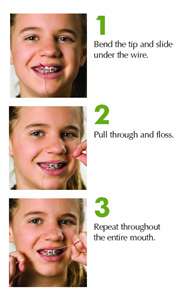
Flossing technique • Tear off about 18 inches of floss, and wind most of it around one of your middle fingers. Wind the remaining floss around the same finger of the other hand. This finger will take up the floss as it becomes used. If you are wearing braces appliances with wires, use a floss threader to maneuver the floss under your wire at every interval between your teeth. As you 'thread' the floss under the wire be sure to:
• Hold the floss tightly (without any slack) between your two hands, with 1/2" to 1" of floss between them. Guide the floss between your teeth using a gentle sawing motion.
• Gently slide the floss into the space between the gum and the tooth until you feel resistance. When the floss reaches the gumline, curve it into a C-shape against the tooth. Do not force or snap the floss.
• Hold the floss against the tooth. Gently scrape the side of the tooth, moving the floss away from the gum.
• Repeat this technique on all of your teeth, and don’t forget the last teeth in back.
• Rinse vigorously with water or mouthwash to remove loosened plaque and particles.
Flossing tips • Establish a regular pattern for flossing so that you don’t miss any teeth.
• As with brushing, flossing should be done gently. Improper flossing can injure your gums.
• If you have not been flossing regularly, your gums may bleed and be sore for the first five or six days. As plaque is broken up and bacteria removed, the bleeding will stop and your gums will heal.
• By age 8, children should be able to floss their own teeth. To make it easier, use a loop of floss. Simply tie the ends of a ten-inch piece of floss, forming a circle. Hold the floss tightly between the thumbs and forefingers, and use the technique above.
• A floss holder can make flossing easier for those who do not have good finger dexterity. Special picks and sticks are also available to help those who find floss difficult to work with. Consult your dentist or hygienist about the best technique for you! Remeber if you are having trouble, we are here to help you @ Boschken Orthodontics! (408) 225-6660
Wednesday, September 26, 2012
Clean Teeth with Braces!
Having braces can present some new challenges when it comes to oral hygiene. Preventing tooth decay can be a big challenge simply because of the tendency for braces to trap food under the wires and between the teeth and the brackets. Here are a few tips to keep your teeth healthy while wearing your braces:
1. Eat Braces-Safe Foods
Keeping your teeth from decay starts with a proper diet. Foods that are high in sugar or starch can cause more plaque which is difficult to remove during your brushing. However there are certain foods that should be completely avoided while wearing your braces.
First, sticky foods like caramel or gum can get stuck in your braces and be difficult to remove during brushing. Next, hard foods such as nuts and candy could bend wires or even break a bracket. Foods that are firm or hard to bite into like apples, carrots, or corn on the cob should be avoided or cut into tiny mini bites. As much as we like to snack on them, those crunchy treats can harm your braces. Things like chips, ice, popcorn can also bend or break your braces. The good news however is that bananas, mangoes, milk, water, poultry, and pasta all tend to be low in enamel-busting acids.
2. Proper Brushing is essential
You'll want to place your toothbrush at a 45-degree angle against the edges of your gums in order to clean the whole tooth, and brush gently in the area between the wire/brackets and your teeth. Use a soft toothbrush and alway use fluoride toothpaste for best results. Rinsing several times every day will help keep your mouth cleaner too! Rinsing is especially important when you have braces as you need to disinfect your entire mouth, including those spots under the braces where your brush can't always reach.
3. Ask Boschken Orthodontics about special cleaning tools
There are special brushes and flossers designed to help you get around and under the appliances in order to clean your braces. You can also find many of these items at your local pharmacy. Look for Proxa brushes, floss threaders, Platypus flossers and disclosing tablets at your store or ask us for samples hen you are at the office!


4. Regular Check-ups and Teeth Cleaning with your dentist
It's important to keep your routine check upappointments with your dentist and dental hygienist for a thorough cleaning twice a year or as directed. The exact frequency of these visits will be up to you and your dentist as some types of braces are more demanding of a regular cleaning than others.
As long as you practice good oral hygiene and follow these basic tips, you should have no problem keeping your teeth from decaying while you wear braces.
1. Eat Braces-Safe Foods
Keeping your teeth from decay starts with a proper diet. Foods that are high in sugar or starch can cause more plaque which is difficult to remove during your brushing. However there are certain foods that should be completely avoided while wearing your braces.
First, sticky foods like caramel or gum can get stuck in your braces and be difficult to remove during brushing. Next, hard foods such as nuts and candy could bend wires or even break a bracket. Foods that are firm or hard to bite into like apples, carrots, or corn on the cob should be avoided or cut into tiny mini bites. As much as we like to snack on them, those crunchy treats can harm your braces. Things like chips, ice, popcorn can also bend or break your braces. The good news however is that bananas, mangoes, milk, water, poultry, and pasta all tend to be low in enamel-busting acids.
2. Proper Brushing is essential
You'll want to place your toothbrush at a 45-degree angle against the edges of your gums in order to clean the whole tooth, and brush gently in the area between the wire/brackets and your teeth. Use a soft toothbrush and alway use fluoride toothpaste for best results. Rinsing several times every day will help keep your mouth cleaner too! Rinsing is especially important when you have braces as you need to disinfect your entire mouth, including those spots under the braces where your brush can't always reach.
3. Ask Boschken Orthodontics about special cleaning tools
There are special brushes and flossers designed to help you get around and under the appliances in order to clean your braces. You can also find many of these items at your local pharmacy. Look for Proxa brushes, floss threaders, Platypus flossers and disclosing tablets at your store or ask us for samples hen you are at the office!
4. Regular Check-ups and Teeth Cleaning with your dentist
It's important to keep your routine check upappointments with your dentist and dental hygienist for a thorough cleaning twice a year or as directed. The exact frequency of these visits will be up to you and your dentist as some types of braces are more demanding of a regular cleaning than others.
As long as you practice good oral hygiene and follow these basic tips, you should have no problem keeping your teeth from decaying while you wear braces.
Monday, July 30, 2012
Some Helpful Hints to Help Reduce Your Braces Treatment Time

Did you know that there are things you can do to make sure your treatment is as short as possible? Here are a few tips:
Wear your rubber bands. Yes, elastics can be a challenge, but if you resist wearing them, you will set yourself back in treatment. By not wearing the rubber bands—or not wearing them enough, you can actually slow down your treatment time. If you are having trouble remembering to put the bands back in after eating or brushing your teeth, download the Rubberband Reminder app to help you remember.
Let your Dr. Boschken and his team know about problems right away. A missing wire, rubber band hook or broken bracket can all lengthen your treatment time, so call our office right away to report any issues rather than waiting until your next appointment. You can even send us a message via facebook, email or our website if preferred.
Keep your appointments. During your treatment, each adjustment is carefully orchestrated to move your teeth a certain way in a certain time frame. Missing an appointment can throw that treatment plan off. Do everything you can to keep your scheduled appointment, and if you have to miss, please call as far as you can in advance to reschedule. (408) 225-6660.
Tuesday, July 24, 2012
3D Scanner Eliminates Impressions
Boschken Orthodontics uses our 3D Dental Scanner to eliminate the need for tooth impressions!!
The Future of Orthodontics, available today.An accurate impression is key to effective treatment planning and orthodontic care. The iOC 3D Dental Scanner captures the contours of tooth and gingival structures, producing an accurate digital orthodontic scan in just minutes.
Benefits of Teeth Scanning:
- ELIMINATES IMPRESSIONS, the most invasive procedure in orthodontic care.
- SUPERIOR ACCURACY with no distortion from patient movement during set, removal of impression, or disinfection.
- ONSCREEN VISUALIZATION allows for immediate adjustment to create the ideal orthodonitc scan the first time.
- INCREASED PATIENT COMFORT as it eliminates the goop and gagging that comes with traditional impressions.
Give us a call @ (408) 225-6660 or peruse our website if you would like further information. We look forward to being of service!

Monday, April 2, 2012
April is National Facial Protection Month!
Nearly 60,000 people injure their faces annually while playing baseball and more than 100,000 people suffer facial injuries from bicycle accidents. This month enhances public awareness of facial protection and specialized treatment for facial injuries, at least half of which are in children. Pediatric dentists, oral and maxillofacial surgeons and orthodontists—which are all ADA- recognized dental specialists—are sponsoring "April is National Facial Protection Month." Their message is clear: Avoid sports injuries by wearing protective equipment. The American Academy of Pediatric Dentistry (AAPD), the American Association of Oral and Maxillofacial Surgeons (AAOMS) and the American Association of Orthodontists (AAO) encourage active people—children, parents, weekend warriors, professional athletes—to play it safe when getting outside this spring (or playing indoor sports). According to the National Institute of Health, childhood sports injuries may be inevitable but prevention does matter. For instance, football players can protect their faces with mouth guards and helmets. Likewise, basketball players should wear mouth guards and eye protection. A study published in the February 2003 Journal of the American Medical Association showed that players who used faceguards—devices made of plastic or metal that attached to baseball helmets—were 35 percent less likely to suffer facial injuries than non-users. Further, the Centers for Disease Control estimates that universal helmet use could save one life each day and prevent one head injury every four minutes. The Marshfield (Wisconsin) Clinic states that wearing protective eyewear can prevent 90 percent of eye injuries in the U.S. It seems the first step to facial protection is just putting on the gear. From skateboarding to rollerblading, baseball to volleyball, karate to gymnastics, downhill skiing to bicycling, all sports are contact sports. From mouth guards, to face shields, to eye shields, dental specialists advocate wearing protective gear to save face.
Top 10 Ways to Save Face
Top 10 Ways to Save Face
- Wear a mouth guard for any contact sport (soccer, yes; chess, probably not). Mouth guards can help prevent jaw, mouth and teeth injuries and are less costly than recovering from the injury. You can purchase one at any sporting goods store or call Boschken Orthodontics for an appointment to make a custom mouth guard.
- Wear a helmet and it will protect your head by absorbing the energy of an impact. You don't have to lose your head because you take a spill when cycling, snowboarding, rollerblading or horseback riding.
- Wear protective eyewear, you'll be able to keep your eye on the tennis ball, baseball, football, etc.
- Wear a face shield to keep your skin free from scratches and bruises. Hockey pucks, basketballs, and racquetballs can do severe damage.
- Be aware of family pets. Each year roughly 44,000 people incur facial injuries from dog bites. Children should be supervised when playing with family pets (cats and rabbits too).
- Buckle up and use appropriate child safety seats. Passengers who don't buckle up are more likely to have a brain injury in a crash than the buckled driver.
- Keep babies and toddlers safe. They crawl and climb, so pad sharp corners of tables, use safety locks on cabinets, install stairwell safety gates, and secure windows. They also chew on things as they teethe, so hide the sharp or pointy objects.
- Be alert. Alert spectators can avoid foul baseballs and flying hockey pucks. Watch your step when climbing up bleachers.
- Use common sense. If an activity carries risk of dental or facial injury, wear the right protective gear. Without it, even a pickup basketball game could result in a trip to the emergency room.
- Ask the experts. To learn more, visit http://www.aaoms.org/, http://www.braces.org/ and http://www.aapd.org/.
Thursday, March 29, 2012
Choosing the right Orthodontist and Team for you!
While it is true than an attractive, healthy smile is an asset that can last a lifetime, not all orthodontic treatment is of the same quality. Choosing the right Orthodontist for your family is too important to simply accept the lowest bid. All smiles are not created equally and simply because a dentist has a license is unfortunately not a guarantee that you’ll be happy with the results. Here are four simple things you may want to consider as you choose your Orthodontist:
Consider the organization of the office and staff. Although you may not thoroughly understand all of the terminology or treatment recommendations initially, you can tell a well-run office when you see one. Is everything clean and in its place? Are the technology and equipment up-to-date? Is the staff friendly, well-trained, and helpful? If so, it is safe to assume that an equal amount of care will go into the treatment the office will provide. What kind of care will you receive from a doctor who cuts corners on his facility and staff just so his fee can be a little lower?
Another consideration should be the Doctor’s attitude towards his job. Will he be passionate about your care? Can he communicate his vision of your treatment plan so that it makes sense? Does he remove braces early because time is up, or does he finish the job? Will he examine your child at every appointment to make sure that treatment stays on schedule? Not all Orthodontists are “hands-on” and it shows in the final results.
Also consider whether the Orthodontist really a good doctor. How did you find him, a recommendation or an advertisement? Have you actually seen results of his work? Do you have friends who are a part of the office? There is misconception that as long as a Doctor has a degree, he’ll be able to give you the same results as anyone else. If that was the case, finding the lowest fee would make sense. Unfortunately, not all treatment is the same. Some Orthodontists do not stay current on the proven state of the art approach Orthodontics can provide today. Some Doctors, such as Dr. Boschken are very particular about their final results and focus on ideal mechanical function as well as a truly beautiful aesthetic result. For something this important, you should carefully decide what approach is important to you.
Finally, how do you feel when you are in the office? Is it a good fit for you and your family? Is it a happy, fun place? Unlike your family physician that you only see when you are sick, you will be visiting your orthodontist and his staff for at least a couple of years, sometimes five or six years if the treatment is done in two phases. You should feel very comfortable and happy and that is primarily why here at Boschken Orthodontics, we want you to feel like you are right at home.
Simply stated, all Orthodontic treatment is NOT the same. The facilities and technology are a reflection of the Orthodontist who will create the smile that you or your child will have the rest of your life. Special attention should be taken to choose the Doctor that you will entrust with this important care. As with most things in life, you usually really do get what you pay for, and when it comes to your smile, you can’t afford to make a mistake. Why not give us a call and visit with us for a spectacular Orthodontic experience? (408) 225-6660
Consider the organization of the office and staff. Although you may not thoroughly understand all of the terminology or treatment recommendations initially, you can tell a well-run office when you see one. Is everything clean and in its place? Are the technology and equipment up-to-date? Is the staff friendly, well-trained, and helpful? If so, it is safe to assume that an equal amount of care will go into the treatment the office will provide. What kind of care will you receive from a doctor who cuts corners on his facility and staff just so his fee can be a little lower?
Another consideration should be the Doctor’s attitude towards his job. Will he be passionate about your care? Can he communicate his vision of your treatment plan so that it makes sense? Does he remove braces early because time is up, or does he finish the job? Will he examine your child at every appointment to make sure that treatment stays on schedule? Not all Orthodontists are “hands-on” and it shows in the final results.
Also consider whether the Orthodontist really a good doctor. How did you find him, a recommendation or an advertisement? Have you actually seen results of his work? Do you have friends who are a part of the office? There is misconception that as long as a Doctor has a degree, he’ll be able to give you the same results as anyone else. If that was the case, finding the lowest fee would make sense. Unfortunately, not all treatment is the same. Some Orthodontists do not stay current on the proven state of the art approach Orthodontics can provide today. Some Doctors, such as Dr. Boschken are very particular about their final results and focus on ideal mechanical function as well as a truly beautiful aesthetic result. For something this important, you should carefully decide what approach is important to you.
Finally, how do you feel when you are in the office? Is it a good fit for you and your family? Is it a happy, fun place? Unlike your family physician that you only see when you are sick, you will be visiting your orthodontist and his staff for at least a couple of years, sometimes five or six years if the treatment is done in two phases. You should feel very comfortable and happy and that is primarily why here at Boschken Orthodontics, we want you to feel like you are right at home.
Simply stated, all Orthodontic treatment is NOT the same. The facilities and technology are a reflection of the Orthodontist who will create the smile that you or your child will have the rest of your life. Special attention should be taken to choose the Doctor that you will entrust with this important care. As with most things in life, you usually really do get what you pay for, and when it comes to your smile, you can’t afford to make a mistake. Why not give us a call and visit with us for a spectacular Orthodontic experience? (408) 225-6660
Tuesday, March 27, 2012
Boschken Orthodontics: All those Orthodontic Terms!
It may feel like you’re learning to speak a different language when you’re talking to professional dental specialist, but it doesn't have to be that way! Here is a quick guideline on some of the terms commonly used by orthodontists and dentists alike.
Anterior Teeth: Front teeth.

Crossbite: One or more upper teeth (either in the front of your mouth or, more commonly in the back) fit behind the lower teeth, instead of in front of those teeth. It’s extremely important this condition be identified and corrected because it can alter your skeletal growth.

Overbite: One or more upper teeth come down too low over the bottom teeth. Too much overbite is often called a “deep bite.”

Open Bite: The upper and lower teeth don’t touch. An anterior (front teeth) open bite is when the front teeth don’t touch the lower teeth and is often the result of thumb-sucking or a pacifier habit as an infant.
Buccal: The side of the mouth closest to your cheek.
Palatal: The side of the mouth closest to the roof of your mouth.
Lingual: The side of the mouth closest to your tongue.
Occlusion: How the teeth bite together between the upper and lower jaws. Ideally, the upper teeth fit slightly over the lower teeth, so the points of the upper molars fit thebumps and grooves of the lower molars. This gives you a good bite.
Malocclusion: You have a malocclusion when the teeth are not fitting together properly. Common types of malocclusions include crowding, gaps or excessive spacing between teeth, crossbite, overbite, underbite and open bite.
Class I Occlusion: Your back teeth are properly aligned and allow for ideal chewing.
Class II Occlusion: Your upper teeth are too far forward compared to your lower teeth, or your bottom teeth are too far back compared to your upper teeth and jaw. This condition makes it look like you have a very small lower jaw or a "weak chin."

Class II, Division 1: Your upper middle front teeth, called the central incisors, flare out over your lower teeth, resulting in an overjet (too much flaring.) This condition is also known as bucked teeth.
Class II, Division 2: Your upper side front teeth, called the lateral incisors, are too far forward and the central incisors are too far back over your lower teeth, often resulting in crowding and an overbite. This condition is also known as a deep bite.

Class III Bite: Your lower front teeth are further forward than your upper teeth. This condition is called an underbite. This condition makes it look like you have a very prominent chin.
Phase I Treatment: This is known as early interceptive orthodontic treatment for children between the ages of 6 and 10. Phase I treatment takes place while the child has a mix of baby teeth and permanent teeth. Phase I treatment helps properly form the jaw and allows the errupting permanent teeth to be guided into their proper positions. This repositions the teeth in a much more stable place than allowing the teeth to come in crooked, and can prevent bigger orthodontic problems from developing in the future. While Phase I treatment can help with many orthodontic problems, it’s common to still need Phase II treatment once all the permanent teeth have grown in .
Phase II Treatment: This type of treatment is recommended when all of the permanent teeth have come in. It often involves braces or other appliances to straighten the permanent teeth and properly align the bite. Some Phase II cases can be treated with clear aligner therapy, such as Invisalign® instead of conventional braces.
For more information about orthodontic conditions and treatments, please visit http://www.drboschken.com/. There you will find further helpful information at your fingertips! Give us a call if you would like to schedule a complimentary consultation (408) 225-6660.
Anterior Teeth: Front teeth.
Crossbite: One or more upper teeth (either in the front of your mouth or, more commonly in the back) fit behind the lower teeth, instead of in front of those teeth. It’s extremely important this condition be identified and corrected because it can alter your skeletal growth.
Overbite: One or more upper teeth come down too low over the bottom teeth. Too much overbite is often called a “deep bite.”
Open Bite: The upper and lower teeth don’t touch. An anterior (front teeth) open bite is when the front teeth don’t touch the lower teeth and is often the result of thumb-sucking or a pacifier habit as an infant.
Buccal: The side of the mouth closest to your cheek.
Palatal: The side of the mouth closest to the roof of your mouth.
Lingual: The side of the mouth closest to your tongue.
Occlusion: How the teeth bite together between the upper and lower jaws. Ideally, the upper teeth fit slightly over the lower teeth, so the points of the upper molars fit thebumps and grooves of the lower molars. This gives you a good bite.
Malocclusion: You have a malocclusion when the teeth are not fitting together properly. Common types of malocclusions include crowding, gaps or excessive spacing between teeth, crossbite, overbite, underbite and open bite.
Class I Occlusion: Your back teeth are properly aligned and allow for ideal chewing.
Class II Occlusion: Your upper teeth are too far forward compared to your lower teeth, or your bottom teeth are too far back compared to your upper teeth and jaw. This condition makes it look like you have a very small lower jaw or a "weak chin."
Class II, Division 1: Your upper middle front teeth, called the central incisors, flare out over your lower teeth, resulting in an overjet (too much flaring.) This condition is also known as bucked teeth.
Class II, Division 2: Your upper side front teeth, called the lateral incisors, are too far forward and the central incisors are too far back over your lower teeth, often resulting in crowding and an overbite. This condition is also known as a deep bite.
Class III Bite: Your lower front teeth are further forward than your upper teeth. This condition is called an underbite. This condition makes it look like you have a very prominent chin.
Phase I Treatment: This is known as early interceptive orthodontic treatment for children between the ages of 6 and 10. Phase I treatment takes place while the child has a mix of baby teeth and permanent teeth. Phase I treatment helps properly form the jaw and allows the errupting permanent teeth to be guided into their proper positions. This repositions the teeth in a much more stable place than allowing the teeth to come in crooked, and can prevent bigger orthodontic problems from developing in the future. While Phase I treatment can help with many orthodontic problems, it’s common to still need Phase II treatment once all the permanent teeth have grown in .
Phase II Treatment: This type of treatment is recommended when all of the permanent teeth have come in. It often involves braces or other appliances to straighten the permanent teeth and properly align the bite. Some Phase II cases can be treated with clear aligner therapy, such as Invisalign® instead of conventional braces.
For more information about orthodontic conditions and treatments, please visit http://www.drboschken.com/. There you will find further helpful information at your fingertips! Give us a call if you would like to schedule a complimentary consultation (408) 225-6660.
Wednesday, March 21, 2012
Boschken Orthodontics discusses: How to Wear Adult Braces with Confidence
Some adults with braces, at times, can’t help feeling a little bit self-conscious. One in five orthodontic patients are over 18 years old, but sometimes it may still be common for an adult to be the only grown-up at a party or work conference wearing brackets and wires. We’ve found several ways of helping you get past the awkwardness and thereby learning to be really comfortable in braces:

*ask us today if you aren't familiar with our referral program benefits (408) 225-6660
- Carry Your Supplies. Make sure you’ve brought along whatever works best for keeping your teeth clean on the go—a travel toothbrush, dental floss, wax, proxabrush, etc. The first step is being prepared!
- Eat Wisely. When you hit the hors d’oeuvres tray, choose bite-sized items you can chew with your back teeth. Anything that fits on a toothpick is usually a good guideline choice. Cheese, small slices of deli meat, grapes, and olives work well but bread, rice and celery, not so much. Also, meats such as bacon have a way of getting lodged between brackets and gums and is really hard to remove. So eat that bacon sparingly if you must, but be prepared for a restroom brushing session later.
- Put Your Best Smile Forward. In addition to doing a good job with your daily brushing and flossing, be sure to get your teeth cleaned regularly at your general dental office! Since it’ll be harder to give those tooth surfaces a good scrubbing, they may start to look a little dingy. The hygienist will thouroughly clean your teeth and remove stains, leaving you with shiny, whiter teeth. Also, remember to consult with Dr. Boschken before using any at-home bleaching kits.
- Break The Ice. Sometimes people aren’t too sure of what to say when they see adults wearing braces. It’s almost like you can see the wheels turning in their heads: “Is she wearing braces? I can’t tell for sure. I wish she’d keep her mouth open longer so I can see. Wait, has she always had braces? Hm, should I say something or just pretend I can’t tell? Am I staring?”
*ask us today if you aren't familiar with our referral program benefits (408) 225-6660
Thursday, January 26, 2012
How does Orthodontic treatment help me, Dr. Boschken?
A comprehensive explanation on how Orthodontics improves your health!
Thursday, June 23, 2011
Why Does Dr. Boschken Recommend Wearing Your Elastics (Rubber Bands)?
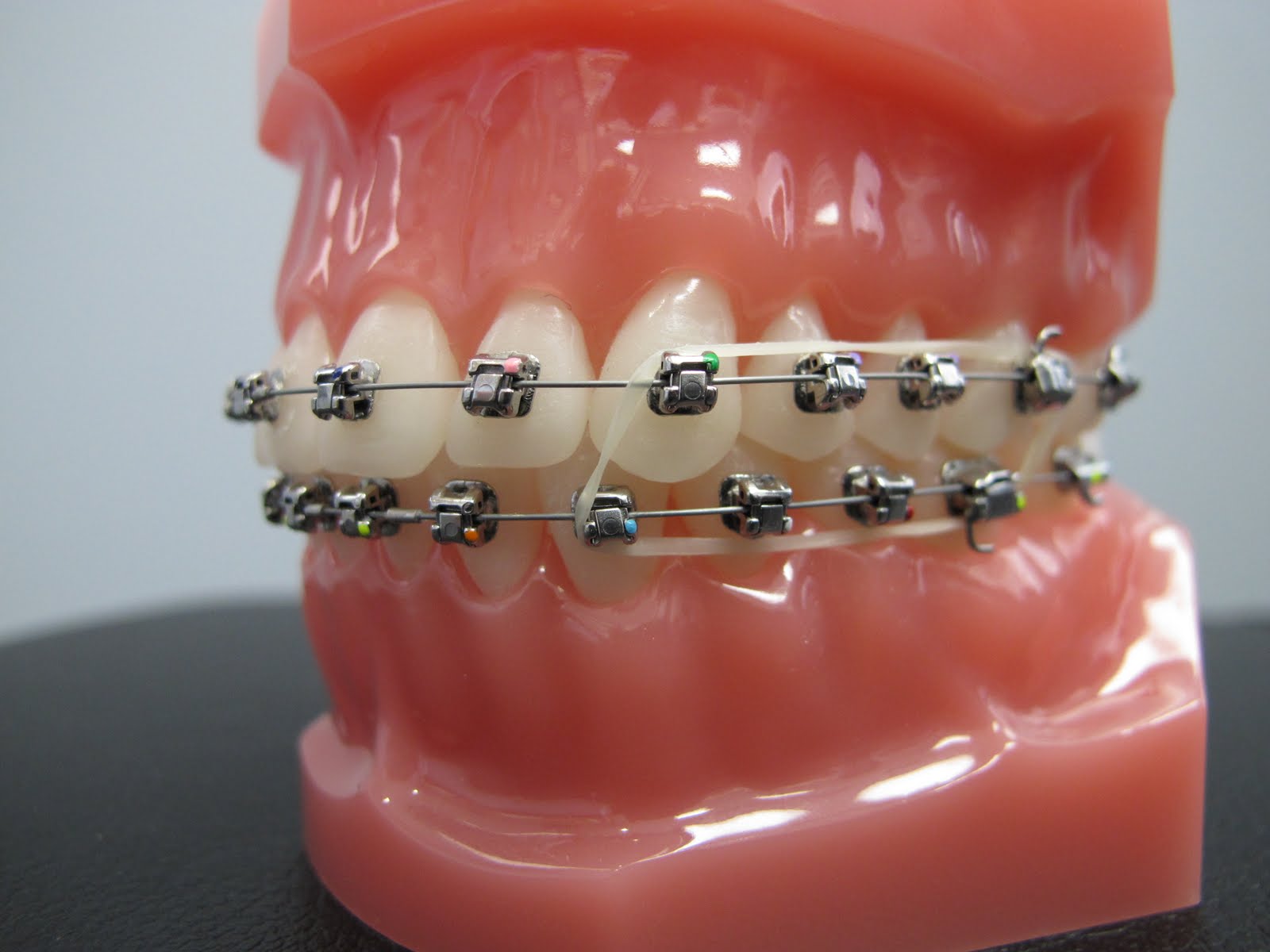


Braces alone (brackets and wires) can align and level your teeth to the adjacent teeth (upper teeth with upper teeth and lowers with lowers) but, if your bite is off (upper teeth do not fit well with the lower teeth) we will often rely on the use of elastics (rubber bands) to help correct the bite.
Elastics are most often used during the 2nd half or toward the end of your orthodontic treatment. Depending on the particular bite problem you have, elastics are worn for as little as a few short months to over a year. Most patients must wear them for several months.
Poor elastic wearing cooperation (not wearing them enough every day) will usually lead to extending your treatment time in braces. In some cases of poor cooperation, in order to achieve an acceptable bite, Dr. Boschken may recommend extracting permanent teeth! To avoid this result, simply wear your recommended elastics.
Elastics come in different sizes and strengths. It is important to follow instructions and wear them as directed for you. . Wearing too strong or too weak an elastic or in the wrong direction, can slow down your treatment and extend your time in braces.
If your teeth are a bit sore from your elastics, don’t take them off! By not wearing them all the time, you are only rocking the teeth back and forth, making them very sore and the bite will not improve. If for any reason you cannot wear your elastics (lost, ran out of a supply of them, discomfort, etc…) call us immediately. Elastics are often the last step in your treatment and continuous wear is crucial to achieve a great smile and a healthy bite. So, if you'd like to finish wearing your braces & have them removed, WEAR YOUR ELASTICS!!
Thursday, April 28, 2011
Orthodontics and Your Child
Phase 1 and Phase 2 Orthodontics – Orthodontics and Your Child
When most people think of orthodontics, they typically think of "braces,” the metal bracket and wire system used to straighten permanent teeth. But certain orthodontic problems are far easier to correct in the early stages of a child's growth and development.
Waiting to begin treatment may actually make it more difficult to treat certain conditions. At Boschken Orthodontics, we believe that early interceptive orthodontic treatment can improve your child’s likelihood of achieving a beautiful, well-functioning bite and smile.
The American Association of Orthodontics recommends that children be seen by an orthodontist by the age of seven. The purpose of an early visit is to evaluate whether changes in the child’s skeletal and bite conditions are needed. If changes are needed, plans can be made to begin treatment at the ideal time.
There are several advantages to early orthodontic treatment. If detected early, harmful habits can be corrected to avoid further, more extensive treatment. In addition, early treatment provides a variety of options that adolescent or adult treatment may be unable to offer. Dr. Boschken and his knowledgeable team will assess your child’s orthodontic needs and recommend options for treatment.
Phase 1 Orthodontic treatment generally occurs on children between the ages of 7 and 10, when the child still has a mixture of primary and permanent teeth. Phase 1 treatment usually lasts about 6-18 months, and the primary objective is to address significant problems to prevent more severe conditions from arising. By addressing early orthodontic needs we can help improve a child's self-esteem and self-image, avoid unnecessary and costly removal of permanent healthy teeth, and shorten overall treatment time. Most children may still need full braces even after Phase 1 treatment.
Phase 2 Orthodontics typically occurs around 11+ years of age, once all of the adult teeth have erupted.
Please contact Boschken Orthodontics with any questions and to schedule your complimentary evaluation at our beautiful South San Jose location. (408) 225-6660


Thursday, March 31, 2011
Recipes to help with orthodontic discomfort
Easy, yummy sample recipes to help with occasional orthodontic discomfort! Enjoy!!


~And as always, be certain to brush and floss after every meal!!
Strawberry Freeze
½ cup plain non-fat yogurt
2 T non-fat dry milk powder
½ cup orange juice
1 ¼ cups frozen or fresh strawberries
½ medium banana, ripe, cut into chunks
2 packets sugar substitute or more to taste
Dash of vanilla extract
3 ice cubes
2 T non-fat dry milk powder
½ cup orange juice
1 ¼ cups frozen or fresh strawberries
½ medium banana, ripe, cut into chunks
2 packets sugar substitute or more to taste
Dash of vanilla extract
3 ice cubes
Place ice cubes in blender first. Add remaining ingredients. Process on low until ice begins to blend into mixture. Increase speed to high and process until smooth. Pour into chilled glass and enjoy!!
Baked Potato Soup
3 strips bacon
2 T. butter
3 T. flour
3 cups milk
grated cheese
1 ½ t. salt
¼ t. pepper
5 potatoes – boil, peel, diced
2 T. minced onion
3 strips bacon
2 T. butter
3 T. flour
3 cups milk
grated cheese
1 ½ t. salt
¼ t. pepper
5 potatoes – boil, peel, diced
2 T. minced onion
Fry bacon with onions together – save grease. Place 1 T bacon grease in double boiler in which butter has been melted. Blend in flour and add milk, stirring constantly. Cook until smooth and thickened. Add salt and pepper, then cooked, diced potatoes, onion and crumbled bacon. Stir- garnish with grated cheese as served.
Chicken Tetrazini
½ chopped green pepper
4 oz. can or jar of sliced mushrooms
8 oz thin spaghetti (or any noodle) cooked and drained
1 can cream of mushroom soup
1 can cream of chicken soup
½ cup thin slivered almonds
1 onion minced
½ cup butter
2 cups chopped chicken cooked
1 cup milk
½ teaspoon of salt
½ teaspoon of pepper
1 cup of shredded cheddar cheese
4 oz. can or jar of sliced mushrooms
8 oz thin spaghetti (or any noodle) cooked and drained
1 can cream of mushroom soup
1 can cream of chicken soup
½ cup thin slivered almonds
1 onion minced
½ cup butter
2 cups chopped chicken cooked
1 cup milk
½ teaspoon of salt
½ teaspoon of pepper
1 cup of shredded cheddar cheese
Sauté green pepper, onion in butter
Mix all ingredients together except cheese and put in 2-quart casserole. Bake at 340 degrees for 30 minutes. Top with cheese and bake until melted.

Mix all ingredients together except cheese and put in 2-quart casserole. Bake at 340 degrees for 30 minutes. Top with cheese and bake until melted.

Chipotle-Cheddar Mashed Potatoes
2 ½ lbs. potatoes, scrubbed and cut into 1 inch cubes
2 ½ t. salt
1 cup milk
1 T butter
1/8 t. ground cinnamon
1 cup shredded white sharp cheddar cheese (4 ounces)
2 canned Chipolte Chilies in Adobo, chopped
1 t. Adobo Sauce from canned chipolte.
2 ½ t. salt
1 cup milk
1 T butter
1/8 t. ground cinnamon
1 cup shredded white sharp cheddar cheese (4 ounces)
2 canned Chipolte Chilies in Adobo, chopped
1 t. Adobo Sauce from canned chipolte.
In large saucepan, combine potatoes, salt and enough cold water to cover potatoes. Bring to a boil over high heat. Reduce heat to medium; gently boil until fork tender
In small saucepan, combine milk, butter, and cinnamon and remaining salt. Set aside.
Drain potatoes. Return potatoes to sauce pan. Place over medium heat; toss about 1 minute to dry out. Remove from heat; add cheese; stir to combine. Add milk mixture; chipolte and Adobo Sauce. Mash. Flan
½ cup sugar
1 2/3 cups (1 can) Sweetened Condensed Milk
1 cup milk
3 eggs
3 egg yolks
1 t. vanilla
1 2/3 cups (1 can) Sweetened Condensed Milk
1 cup milk
3 eggs
3 egg yolks
1 t. vanilla
In round 9” cake pan, sprinkle sugar evenly. Place over medium heat on burner and shake until sugar is caramelized (light golden brown) [watch carefully – this only takes a minute or two and it burns very easily]
Combine other ingredients and mix. Pour over caramelized sugar. Cover with foil. Place cake pan in another larger, shallow pan filled with enough water so that the cake pan with ingredients will be covered halfway. Bake 55 minutes at 250° in this water bath. Uncover and cool 30 minutes. Loosen edges with knife. Carefully flip over onto a large plate - it's easiest to place the plate upside down on the rim of the pan and turn them both over together, then slowly lift the pan to reveal the flan. Cut into pie-like pieces.
Combine other ingredients and mix. Pour over caramelized sugar. Cover with foil. Place cake pan in another larger, shallow pan filled with enough water so that the cake pan with ingredients will be covered halfway. Bake 55 minutes at 250° in this water bath. Uncover and cool 30 minutes. Loosen edges with knife. Carefully flip over onto a large plate - it's easiest to place the plate upside down on the rim of the pan and turn them both over together, then slowly lift the pan to reveal the flan. Cut into pie-like pieces.
Tuesday, March 15, 2011
Yelp reviews for Boschken Orthodontics
In love with your smile? We invite you to share your review of us on Yelp!
 For years, Boschken Orthodontics has set the standard of excellence in orthodontic care. With offices in San Jose, Los Altos, and Mountain View, Dr. David Boschken provides a winning smile and improved self-confidence to every patient.
Whether you've visited our office for a week, months or even years, we'd love to hear your feedback about how our offices are faring! There are lots of ways you can share your thoughts about our practice on the Web, but we encourage you to head to our Yelp page and write a review there.
After all, reviews help Dr. Boschken and our team create more beautiful smiles!
You may want to simply click here for San Jose or here for Mountain View to get started, and as always we thank you for your participation.
Wednesday, March 2, 2011
Boschken Orthodontics Insurance Billing and Financing Options

There are many different agreements between insurance carriers and their subscribers, and each contract provides a different benefit. However, orthodontic insurance generally differs from regular dental insurance in that each insured individual usually has a lifetime maximum benefit for orthodontic services. This benefit is paid as a percentage of the orthodontic fee (initial fee, monthly payments, etc.) until the benefit maximum has been reached. Also notable is that orthodontic benefits are paid in small installments throughout the course of treatment rather than in one lump sum. If your insurance changes during orthodontic treatment, we may not receive your full benefit. Please advise us if your insurance is going to change or terminate as soon as possible. We are happy to promptly resubmit to new carriers if you inform us. Remember too that fees incurred for lost or broken appliances and retainers will not be covered by insurance.
For your convenience, we are flexible on our payment plans and do accept payment from insurance companies. As a courtesy, we will gladly submit claims on your behalf. When our Treatment coordinator goes over Dr. Boschken’s fees, she will give you the total amount due for that particular patient’s treatment plan. Financial arrangements can be made based on your estimated insurance benefit estimate. This allows our patients to budget for a monthly fee. Payments are also accepted on Visa, MasterCard and Discover (and payments can be made on-line too!). A down payment of 30 percent is due at the time of service when braces are applied to the patient’s teeth. Seriously delinquent accounts (90 days past due) will lead to delayed treatment progress or the removal of orthodontic appliances.
Helpful hints:
§ Know what your benefits are before treatment starts. Our treatment coordinator will gladly verify estimated coverage over the phone on your behalf. If you’re ever unsure, please contact your insurance company.
§ Our Insurance Coordinator will be glad to file claims on your behalf. We simply need your carrier information (including the phone number) , the employer information and the insured social security or i.d. number before treatment has begun.
§ We cannot render services on the assumption that our charges will be paid by an insurance carrier. Simply stated, you must be making regular monthly payments to be credited to your account in addition to monies expected from the insurance company.
Orthodontic care requires a specific-term financial commitment, and we do offer no-interest monthly payment options, credit card acceptance and paid-in-full discounts. Please speak to our financial or treatment coordinators ahead of time if you anticipate problems making payments.
A monthly payment is due regardless of your appointment dates. While you may have an appointment with Dr. Boschken every five to six weeks, your monthly payment is still due.(Please note that each payment does not reflect one particular visit. Rather, your overall treatment fee is divided into monthly payments to make braces more affordable. For example, you may have 24 monthly payments in your contract, but Dr. Boschken may have seen you 20 times or 40 times throughout your treatment.)
We also do offer third party financing, some plans are interest free!
Please do not hesitate to contact us with any questions you may have. We appreciate all of our patients, and we want to do our best to serve you.


Subscribe to:
Posts (Atom)